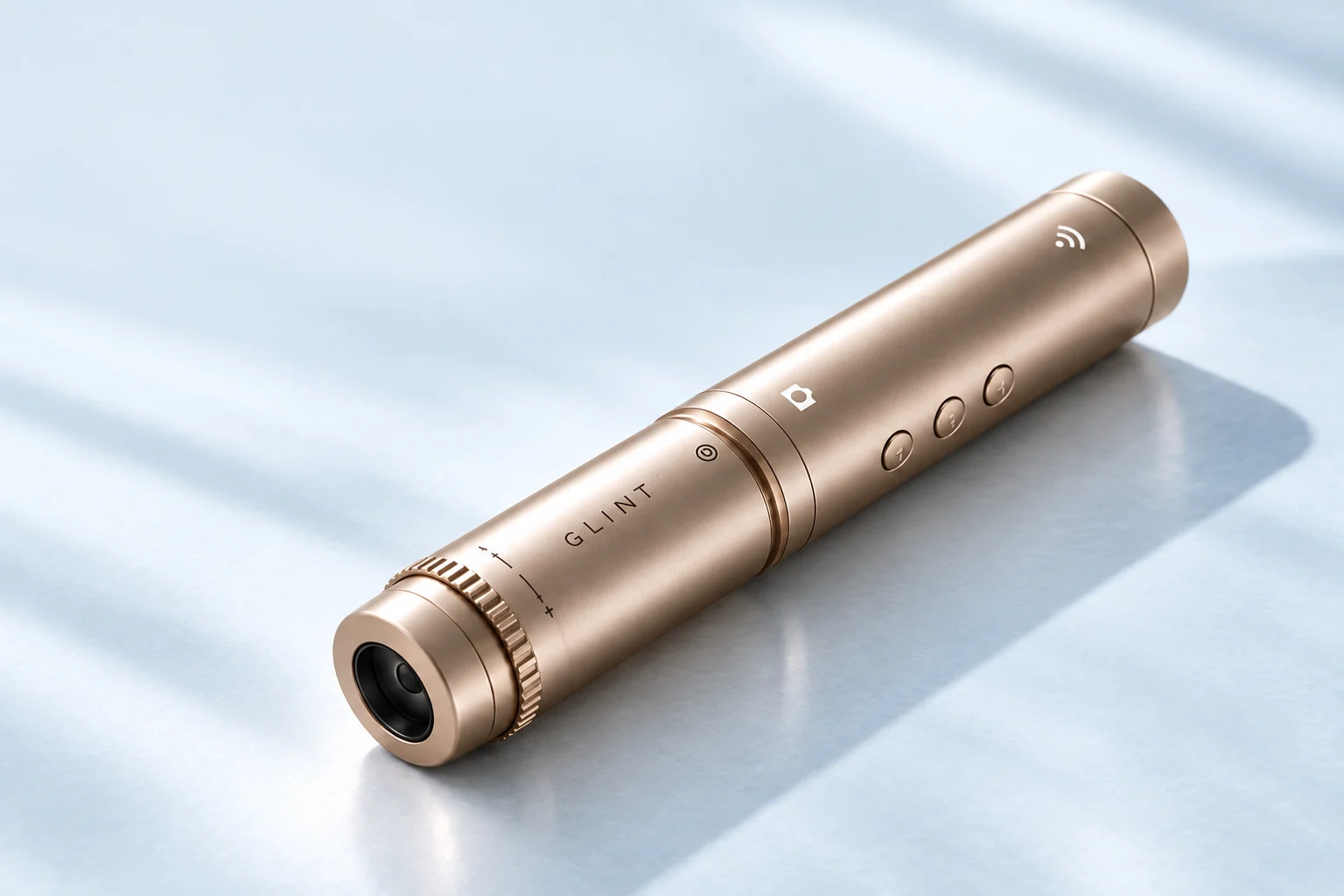
A selfie can show an overall change in your hair. A close-up scalp image can reveal detail that a regular photo misses. Both are most useful when you can compare them with earlier images of the same place.
Make a baseline you can return to.
Choose one or two areas you want to follow, such as your crown, part, or hairline. Take a wider photo to remember exactly where the area is, then capture a close-up image. Save the date and area name with it.
A single close-up cannot tell you why hair is shedding or whether a treatment is working. Its value is as the first point in a record.
Keep the conditions as similar as you can.
At each check-in, part your hair in the same way and return to the same spot. Try to use comparable light, distance, camera angle, and hair condition. If you switch lighting modes or photograph a different patch of scalp, label that image instead of treating it as a direct comparison.
You do not need to scan every day. Pick a repeatable interval that fits your routine; consistency matters more than frequency.
Look for a pattern, not a verdict.
Put images from the same scalp area side by side. Compare several check-ins rather than two isolated moments. Keep a short note if something in your routine changed—such as a new product, a haircut, or a treatment—so you have context later.
GLINT is designed for this kind of record: its wireless camera shows your scalp live on iPhone, captures magnified images, and saves scans by area for comparison over time.
Know what an image cannot answer.
Magnified images can help you observe hair and scalp, but they are not a diagnosis. Changes in lighting, position, and styling can look like changes in hair. If you are worried about new or worsening shedding, irritation, pain, or patches of hair loss, a dermatologist can evaluate the cause and advise you on care.
Dermatologists use trichoscopy—magnified examination of hair and scalp—as one part of clinical assessment. That clinical use should not be confused with a home camera automatically providing medical conclusions.